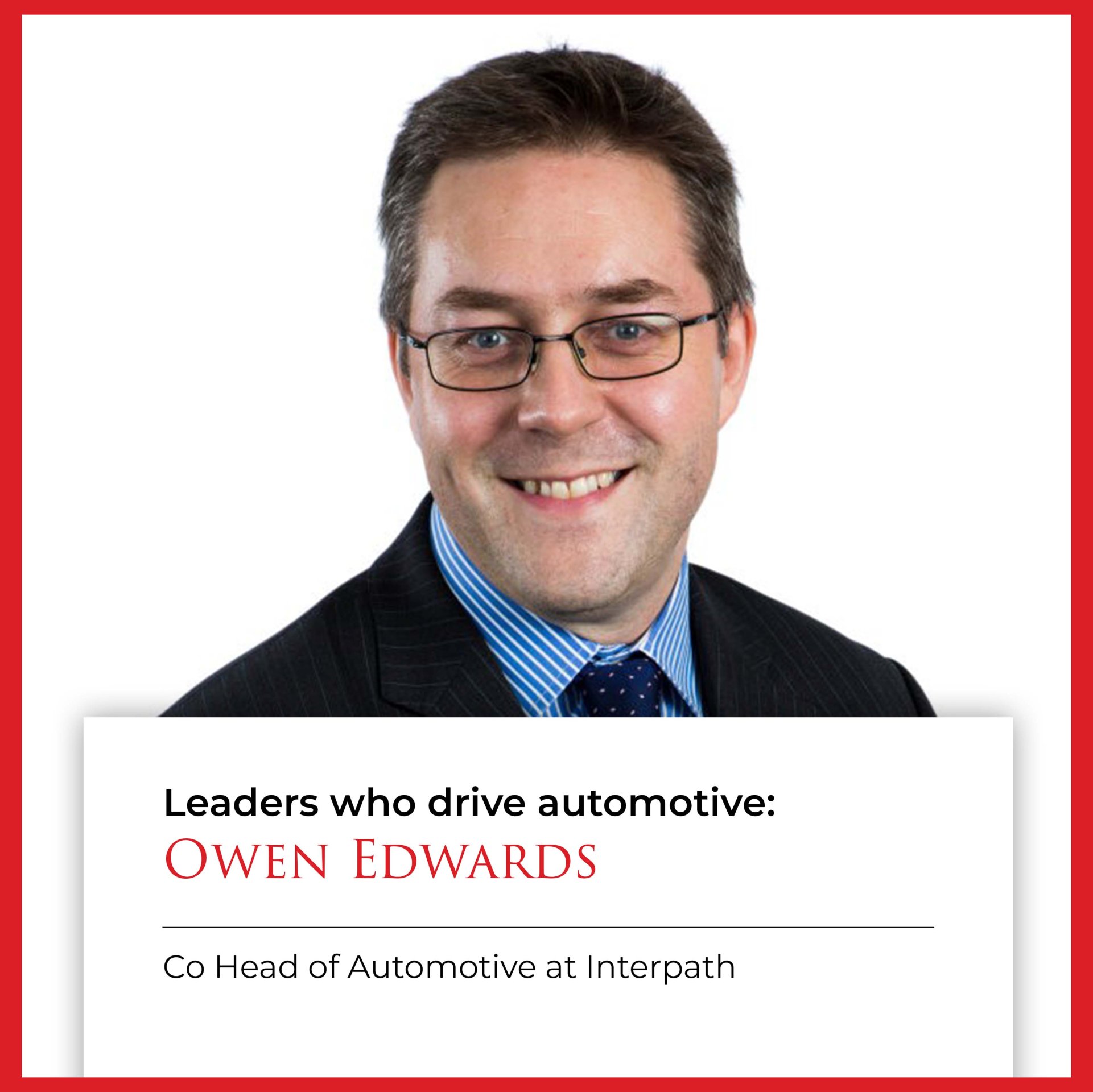

Phill Jones, COO at MOTORS, has seen too many people come into the automotive sector, thrive for a couple of years and then stagnate or leave. He explains to Lynda Ennis, Co-founder and CEO of Ennis & Co Group, why succession planning and structured development are so crucial.
You’ve built an impressive career across various digital and media organisations, including 15 years in automotive with eBay Motors Group and now as COO at MOTORS. Tell me about your career journey.
I don’t really think of myself as ‘automotive through and through’. I ended up here almost by default, rather than as part of a pre-planned career trajectory. What has always appealed to me is working in a medium-sized business – not so small that it feels hand-to-mouth or lacks structure, but not so large that you end up lost in a vast corporate machine where it’s hard to make an impact or see the results of your efforts.
At 21, unsure of what direction to take, I chose accountancy as a way to gain a professional qualification and build a solid foundation for any career. That decision proved to be invaluable early on, as it gave me broad exposure to different businesses, industries, and ways of working. I’ve always been a bit of a nerd in that sense – I genuinely find businesses fascinating. Specialising in corporate finance allowed me to gain insights into how organisations operate at a strategic level, and I was fortunate to be exposed to the C-suite very early on. By 23, I was already sitting in boardrooms alongside CEOs, contributing to strategic decisions for companies generating multi-million-pound revenues. It was an incredibly stimulating experience, but I quickly realised that while the exposure was invaluable, I wanted something more operational – to see the impact of decisions on the ground, not just on paper.
I was quite deliberate in my career moves. I first built expertise in professional services, then gradually shifted into operational roles. This approach led me to a business development role at the Daily Mail & General Trust, supporting their regional newspapers’ digital growth with a clear aim of moving closer to day-to-day operations. One of my strengths has always been the ability to see the bigger picture while also translating strategy into practical delivery. My grounding in professional services allowed me to skip a few layers that might have slowed my progress, and by the age of 30, I had already moved into business director and commercial director roles. This was not accidental – I have always been intentional in building my career, understanding what opportunities to take and how to leverage them effectively. While I admire those who take a more organic route, for me, a structured and deliberate approach has consistently worked well.
Interestingly, my goals today are not so dissimilar to those I had when I was 19. I have always been drawn to technology, media, and telecoms, and I knew I wanted to work in that sphere. I also recognised early on that I was not suited to start-ups or to very large corporates, preferring the middle ground where I could have visibility, impact and influence. Working in M&A and private equity gave me exposure to a wide variety of business models and structures, and I was struck by how many senior, highly intelligent people were approachable, collegial and willing to share their experience. That environment, and the people within it, ultimately shaped my career path and gave me confidence in pursuing the roles and industries that suited me best.
You’ve led through a lot of change across your career, whether that’s acquisitions, integrations or broader transformations at MOTORS, eBay, and now MOTORS/Cazoo. Those are rarely straightforward, and they can be tough on teams as well as leaders. How have you drawn on your skills and experience to guide people through those periods, and how do you balance driving the commercial side with supporting your teams through the uncertainty?
For me, openness and context are crucial. I like to think I am quite open in sharing the bigger picture with my teams, even in the more difficult times. Thinking back to the early days of MOTORS when we were loss-making, I was always transparent about what that meant for the wider business and for us as a team. It taught me that people might not always like what they hear, but they deserve to understand the reality. I also make a conscious effort to listen to people and make myself available – whether that be practically or emotionally. I have found this has really helped me challenge poor behaviours and address concerns directly. It is often the case that just talking things through can make a big difference.
In my current role as COO, I describe it as a bit of a mongrel role: my primary responsibility is commercial – revenue, operations, customer service and back-office support – but I also shape what comes next. It’s very much a ‘jack of all trades’ position, and I enjoy that. I can be the voice of the customer, dealer-focused and also deeply involved in the detail – whether that is contracts, systems or ensuring the team has the right tools and information to work effectively.
I feel my background in finance has been a real asset in this. It helps me frame things clearly through numbers, which is a universal unnecessary emotion and allows me to prioritise effectively. I often do the maths for myself first. It allows me to explain the logic and help people understand why we are making certain choices. We also use an OKR framework, which helps a lot with providing clarity on what success looks like. That combination of structure, transparency and communication has been fundamental for me in steering teams through transformation.
With automotive retail and marketplaces evolving so rapidly, with new digital platforms, shifts in consumer behaviour and changing dealer expectations, there’s a huge amount of pressure on everyone. What do you see as the biggest leadership challenge in navigating those changes? And how do you stay ahead of the pace while balancing the use of technology with the human side of the business?
One of the biggest challenges that has impacted me has been managing multiple ownership changes. Over the 15 years I have spent with MOTORS, I have had five different owners, and by implication about 10 of those years have been spent either preparing for or recovering from a sale. That has made it difficult to keep the business moving forward without becoming too internally focused. In situations like these, it is easy to get caught up in what feels urgent inside the business and lose sight of what really matters to customers.
I have observed this across the industry too. Many businesses are so inward-looking that they develop a closed mindset, with little capacity to think even three or five years ahead. These sorts of issues we face as an industry are not necessarily new, but they are not always factored into operating models in a way that prepares businesses for the future. I often joke that in 15 years of selling to car dealers, there has really only been a three-month period where they didn’t describe the market as ‘tough’ – and that was immediately after Covid.
From a leadership perspective, I have noticed that those who come in from outside of the automotive sector often thrive once in place. The challenge is that organisations do not always look to other industries or invest enough in developing their people. Too often, talented individuals hit a glass ceiling. They come in bright and motivated, spend a couple of years working hard and producing excellent results, then stagnate or leave.
In my opinion, succession planning and structured development are crucial. Sometimes, just giving people a clear development path or a sense of hope can extend their commitment and impact significantly. In a sector where change is constant, building and supporting the next generation of leaders is just as important as embracing new technology or consumer trends.
You’ve come through a fairly traditional commercial background as managing director and commercial director before moving into your current COO role. Do you think career pathways are changing these days?
I do think there are still some relatively traditional career routes – mostly within law firms, banks, and professional services – but career pathways are most definitely shifting. The younger generation tend to be less patient and are seeking progression faster, which makes talent development even more important. If we do not invest in our younger workforce, they will quickly be tapped on the shoulder by someone else. I also see more people entering with entrepreneurial experience, whether that is starting their own business or building a new product. This combination of self-starting initiative and professional drive is rare, but powerful.
One of our current challenges, for example, is encouraging our own people to see sales as a genuine long-term career. Historically, sales has not always been viewed this way – it’s often joked that you don’t choose a career in sales – but actually, it’s the lifeblood of an organisation. Unlike coding or technical skills, where you can teach someone from scratch, there are fewer people who can be taught to do sales, want to do sales, and have the resilience to succeed. One of the things we focus on is providing high-quality sales training and development, leaning into growth mindset, feedback, and self-improvement. Our sales team has really embraced this approach: they see that if they learn from each call and pick themselves up quickly, they perform better and ultimately earn more.
We are transparent with people that, while a higher-paying job or a sales manager role may not always be immediately available, we are committed to setting them up for their career – hopefully with us, but if not, they leave with skills and experience that will serve them for life. This investment has clearly paid off: attrition has decreased, and quality has improved. It all comes back to thinking smarter – recognising whether challenges are structural or about mindset and development.
Given your focus on talent development, what would you be looking for in a potential successor?
When I think about what I would look for in a potential successor, breadth of experience is a key attribute. It’s not enough to be highly skilled in one area – you need visibility across the business and an understanding of how different functions connect. Individuals who stand out are those who move laterally, put their hand up for new projects or roles, and actively seek exposure beyond their immediate responsibilities. Siloed thinking is one of the biggest challenges to overcome, and those who can connect the dots themselves, even one or two layers below management, make the job of leadership significantly easier. They notice gaps, ask the right questions, and start to piece together how the organisation functions as a whole.
Equally important is mindset. A strong successor understands that leadership isn’t just about delivering for shareholders or personal ambition – it’s about thinking in the interest of the team. Simple things, like recognising the cumulative impact of meetings or prioritising the time of your colleagues, matter. Those small but considered actions show awareness and empathy, and they ripple through the organisation.
Leadership is also about energy and presence. I once attended a RADA training course – part of an offshoot programme – that taught us to ‘strip yourself down and paint yourself up’ for the role you need to play. The exercise was intense and challenging, but it was invaluable. The lesson was simple: how you enter a room, the energy you project, and how you interact with people has a direct impact on the team. You don’t need to be inauthentic, but self-awareness and the ability to consciously influence your environment are critical. When done well, it allows you to lift people, inspire confidence, and positively shape the culture around you.
In short, the successor I would look for combines broad organisational exposure, curiosity and initiative, empathy, and the conscious projection of leadership presence. They are the people who not only understand the business strategically but can also bring others along with them – noticing what matters, connecting the dots, and energising the team in a way that drives performance.
Leadership often teaches you a lot about yourself and the impact you have on others. Looking back over your career, who has inspired you along the way? Have you had any ‘light bulb’ moments where you observed someone and thought, ‘Wow, there’s something special here’? And how have those experiences influenced the way you try to inspire others?
I’ve been very fortunate throughout my career to work with several inspirational leaders, and I’ve taken valuable lessons from each of them. One that stands out in particular is Sandy Schwartz, the former president of Cox Automotive in the US. At that time, Cox in the US was a huge organisation, generating $1-2 billion in revenue, while our operation in the UK was comparatively small – at around $10 million. Once or twice a year, the American leadership team would visit the UK, and Sandy really stood out for several reasons.
Despite his seniority, he always made a point of getting out and meeting people directly. He was incredibly generous with his time, remembered people’s names, and had that rare charisma where you genuinely felt you were in the presence of someone important. Yet, despite all of that, he remained completely authentic.
He showed real interest in the team, gave us confidence that he had our backs, and created an environment where achieving targets wasn’t just about meeting numbers, but about earning credibility for future investments. From him, I learned the power of combining presence and authority with authenticity and care. That balance – being visible, commanding respect, but also being approachable and supportive – has profoundly influenced how I try to lead and inspire others in my own career.
Looking back over your career in automotive leadership, what’s the one piece of advice you wish you’d received earlier? And was there a specific moment or experience that made you realise just how important that advice was?
Early in my career, as a graduate, I often found myself in very senior meetings. That exposure was incredibly insightful, but it also slightly shielded me from the reality of life on the floor. If I could give my younger self one piece of advice, it would be: get out there, meet the customers, and really understand how the business makes money. Spending time with people at every level, sitting alongside them, observing, and listening always teaches you something valuable. That is a practice I now encourage everyone on my teams to adopt.
Another piece of advice I’ve come to value greatly is the importance of making time for reflection and planning. The danger, especially as you reach mid-career, is complacency. Life gets busy, and it’s so easy to become entirely absorbed in the day-to-day. The last five years, in particular, have flown by. While I’ve gained a huge amount of experience, I haven’t always focused enough on my own personal and professional progression.
At this stage in my career, at 46, my ambitions are very different from what they were at 27 or 28. I’ve had to consciously re-evaluate what truly brings me satisfaction and think carefully about where I want to be in 10 years’ time. This has required discipline – I’ve forced myself to set aside time to establish objectives for myself, just as we do for the business. I often compare it to going to the gym: you know it’s good for you, but it still takes willpower to do it consistently. Over time, I’ve learned just how valuable that practice is.
As a team, we’ve collectively become better at pausing to reflect, and I’ve realised how important structured reflection and planning are. Without it, it’s easy to be consumed by immediate priorities and lose sight of longer-term growth and development – both personally and professionally.