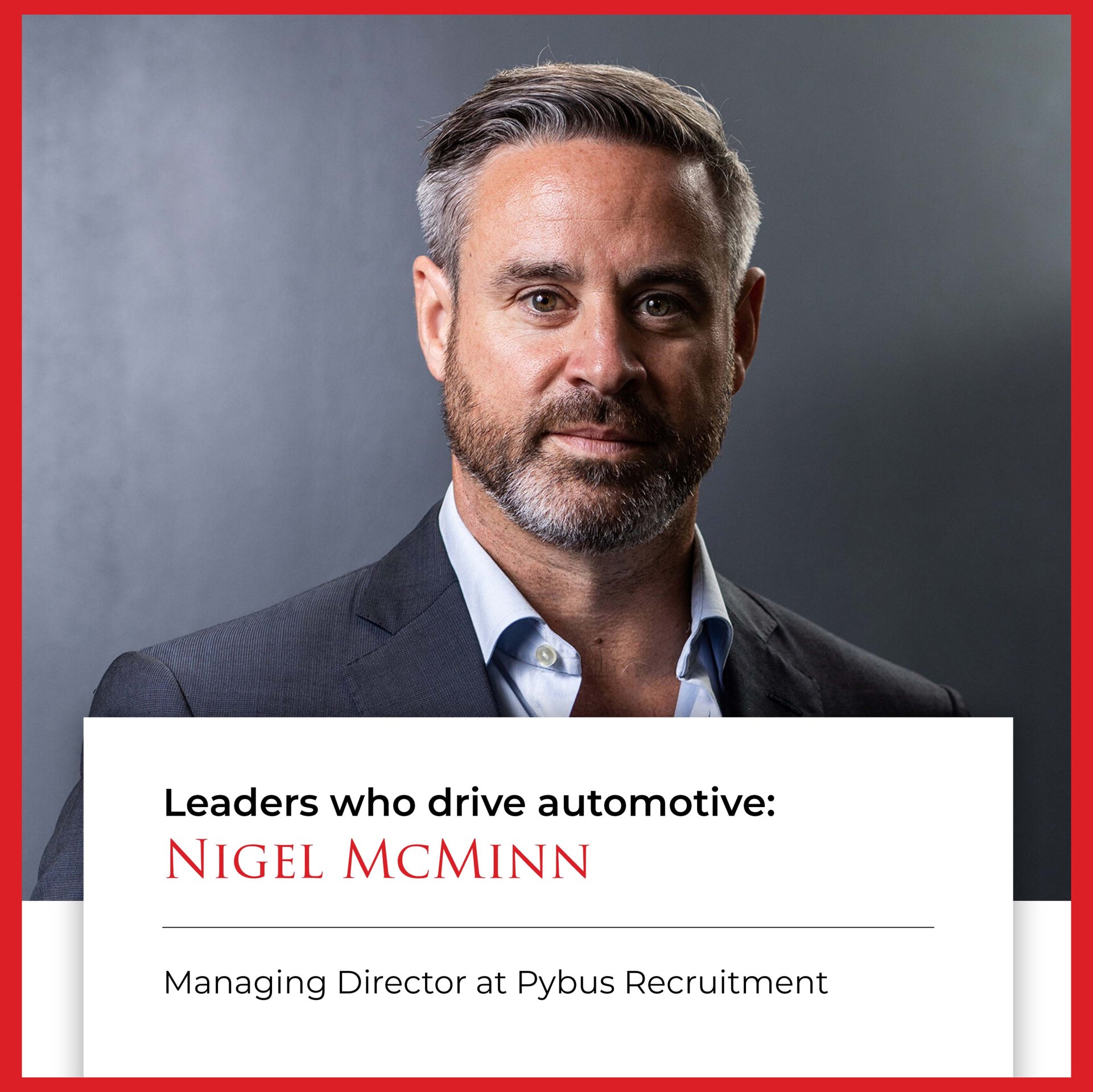
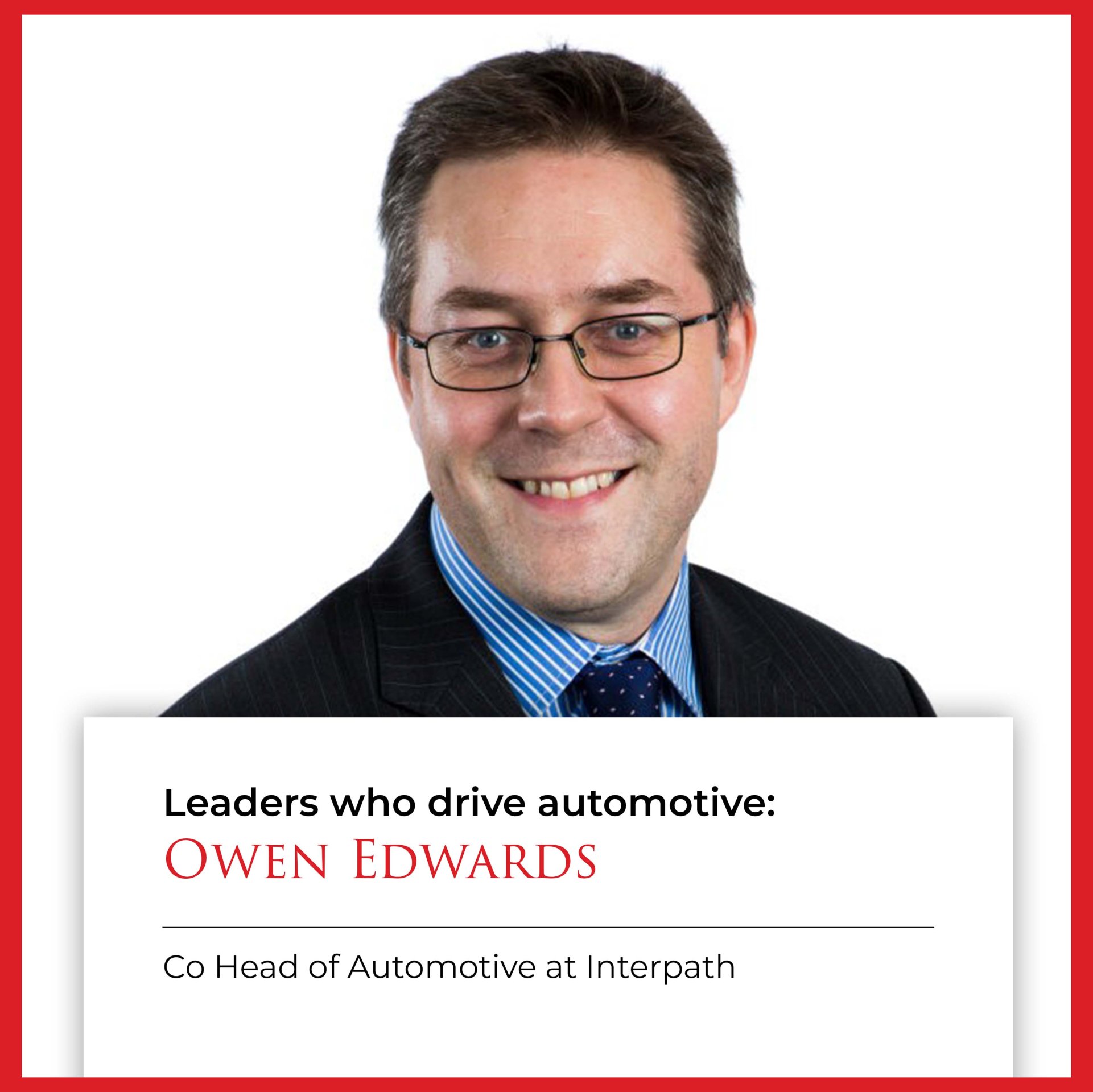
Owen Edwards, Co Head of Automotive at Interpath, has ‘changed lanes’ from industry leader to external consultant. He tells Al Clarke, Chair of the Ennis & Co Advisory Group, that he is driven by analytics and the need to fully understand a problem before trying to solve it – plus a passion for his work.
You began your career in investment banking before joining the automotive industry as a consultant. You then took a leadership role at Inchcape PLC before returning to consulting, culminating in your current role as Co Head of Automotive at Interpath. Can you walk me through how you moved from one role to another?
I always aspired to be an accountant. I was a bit green at first and was unsuccessful with my initial applications, but I eventually joined a private equity/investment banking/private wealth-type business, which is now part of Merrill Lynch. I spent a year there and realised there was far more to finance than accounting. I actually enjoyed fund management and, following that experience, I self-funded an MSc in Investment Analysis at Sterling University.
After gaining my MSc, I joined Albert E. Sharp, a private client stockbroking and fund management business in Birmingham. I spent my early days training as an investment analyst and fund manager and, within a couple of years, our team became the number one small company fund management team in the UK. This was an excellent grounding. I credit my early development to two phenomenal colleagues – Simon Smith and Phil Harris – who helped shape my analytical skills.
After a while, I decided I wanted to understand more about industries themselves – the ‘why’ behind the numbers. On the buy-side, we were buying stocks and shares, but I wanted to get into the opposite side – investment banking and deep analysis. So, I joined Dresdner Bank in 1999, during the tech boom. Stocks went from zero to hero overnight – a perfect demonstration of market bubbles. By 2001, the tech crash hit, and I had to adapt quickly.
At that point, a colleague, Ed Wright, introduced me to the analysis of the motor retailing sector. I’d always had an interest in cars but didn’t know how to enter the industry. I was introduced to Sir Peter Vardy, Tony Bramall, Richard Palmer and others in the PLC sector. This gave me an entry point to really understand the automotive retail space – not just the numbers but the operational and strategic complexities of the industry.
Leading up to the 2007 financial crisis, I saw the warning signs and spoke to Peter Johnson, the CEO of Inchcape at the time, about moving into the sector. I joined Inchcape as Strategy Manager and Director of Business Development. This was a complete eye-opener, shifting from high-level analysis of hundreds of businesses to understanding the detailed operations of 20 to 25, including international markets. The downstream automotive industry is complex, from new and used vehicle sales to service, production, body shops, and parts logistics, and I developed a real admiration for those working in it. I spent significant time at Inchcape’s Romford head office and travelled a lot internationally, gaining deep operational insight and working closely with Deloitte, KPMG, PWC and Grant Thornton.
I then moved to Marshalls, furthering my consulting experience and taking part in the IPO with the then-CEO, Daksh Gupta. Grant Thornton approached me afterwards and, until recently, was Head of Automotive, building the business end-to-end from strategy to operations, factory gate to consumer, and gaining a comprehensive understanding of the automotive landscape.
Looking back over your career, what do you see as the key factors that have enabled your success? Thinking about the organisations, brands and roles you’ve worked with, what do you think has contributed most to the outcomes you’ve achieved?
I see my career not as a stellar career, but a meaningful one. What drives me is analytical understanding. Whatever you’re doing, you shouldn’t just dive in. You have to truly understand the problem at hand. You can only solve something when you fully understand it, and then you apply analysis. I’ve always been focused on analytics. Fundamentally, it’s about getting that analysis right, but also factoring in your own passion for what you do. That passion rubs off on other people.
Equally important are trust, honesty and integrity. If people don’t trust you, everything falls apart. I’ve worked with everyone from Ford to Mazda to Mercedes, and it’s the same whether it’s leasing, fleets, rental, dealers or manufacturers – fundamentally, you have to operate with honesty and integrity. You carry a lot of knowledge, and how you use that matters.
In terms of my career path, I’ve often ‘jumped lanes’, but if you put your passion and mind to something, you can do it. Everybody fails, and I certainly have in the past. But that doesn’t mean you can’t recover or succeed. Those changes have made me quite unusual, particularly when I made those transitions at times when it wasn’t really the done thing. Moving from industry into an advisory position, for example, is not an easy feat. My mindset wasn’t to become an adviser. It was always about, ‘What can I do to help this company succeed?’
Now, I’m able to look at things from both perspectives: through the advisory lens, with no emotion and a structured consulting process, but also through my industry experience, asking how I can genuinely add value. That’s where you build rapport and credibility. Am I risk-averse? Yes, most of the time. But looking back at my career, it might not seem that way.
What, in your view, are the most important qualities that make someone an effective leader?
As I said before, it’s important to earn trust by leading with honesty and integrity. That’s absolutely massive. If people don’t trust you, it all falls apart. If you’re trying to lead anything or move something forward and they don’t trust you, and they don’t believe you have the integrity to guide them, it will never work.
Maintaining that trust allows the experience you gain to be applied independently to other projects. It also means you can have open, constructive conversations and challenge assumptions without damaging relationships, which is essential when you’re leading teams or advising clients. Ultimately, without that foundation of trust and integrity, nothing else – strategy, analysis or execution – can succeed in the long term.
You’ve made some significant moves between industries and roles in your career. Are you fearless, or is it curiosity that drives you to make those moves?
I do worry sometimes, but I just don’t let it stop me. For instance, in 2006, I pivoted in my career in a big way. Jumping from investment banking into industry in 2006 was unusual. Many now take that route, often into investor relations roles, but, at the time, it was a big leap.
I did a self-funded MSc in investment analysis very early on. I didn’t even really know what it fully entailed. Some people said I was mad, and my parents were cautious, but I knew that if I applied enough passion, drive and focus, I could succeed. There’s not a lot that can stop you if you want it badly enough.
Everyone fails. I’ve failed in exams – A levels didn’t go exactly as planned – I’ve done projects that haven’t gone perfectly. But those failures don’t mean you can’t succeed later. They shape you and make your path unique
That’s interesting. How do you approach advisory work in terms of engaging with clients or projects?
I look at it in two ways. First, from the adviser perspective, you must be independent and objective. You follow the standard consulting process: discovery (understand the business and identify what’s wrong); design (develop solutions); implement (put those solutions into practice); and report (track and communicate results). That framework, combined with integrity and passion, is what allows you to make meaningful impact.
While the advisory process is standardised, I also always ask myself, ‘What value can I add from my industry experience?’ That’s how you build rapport and trust with people in the industry because they can see you really understand it. I simply had to understand it, and there was no other option. Personally, I think more people should move from the automotive industry into advisory roles. It’s been a big change, but the risk is manageable most of the time, even if it doesn’t always look like it from the outside.
Having worked both inside global businesses and as an adviser, how do you see leadership differing between leading within an organisation versus advising one from the outside?
On the inside, there’s a lot more emotion involved, and you get in the weeds, whereas as an adviser you can step back and separate your emotion from the situation. Both approaches have advantages. When it’s your own business, you’re pushing it in the direction you want, but the downside is that your emotional attachment to it can often make it hard to see the wood for the trees. Many business owners tell me they wish they’d switched to an advisory perspective sooner because they didn’t anticipate certain challenges or risks.
On the advisory side, there’s naturally less emotion. You’re moving between sub-sectors, and you don’t become personally involved in the day-to-day pressures. But you can still empathise and understand the business, its people and its culture. Some advisers can detach themselves quickly; others take more time to balance objectivity with insight. The ability to maintain that perspective while still providing practical, actionable guidance is what makes advisory leadership distinct and, in many ways, complementary to operational leadership.
What advice would you give to someone who aspires to take on a leadership role within a business? Are there particular mindsets, skills, or approaches you think are essential?
I think people can get so caught up in the day-to-day that they forget to pull back and take a broader view. Sometimes it takes the perspective of an adviser to help you step back and see the bigger picture. You need to take a step back and look strategically at the future, understanding not just what’s happening now but also the direction and strategy of the business going forward.
It’s easy to become overly focused on either value or growth, but you don’t need 100% of either. Value gives you a clear sense of where the business currently stands, the health of its operations and the impact of your immediate decisions, while growth is about stretching the organisation into the future, exploring opportunities and thinking about how to evolve and adapt. Leaders need to maintain that balance constantly, making sure they don’t lose sight of either, and always asking themselves, ‘What is the strategy? Where are we heading? And how do we make the decisions today that will set us up for success tomorrow?’
How do you ensure you stay ahead of trends and anticipate changes that might affect your business?
You do have to understand trends and look at them constantly – macro, sectoral and internal to your business. For example, in leasing companies, residual values for battery electric vehicles have fallen. Back in 2002–2003, we analysed the market and predicted this shift, despite many thinking RVs would remain the same. Why? Battery technology was improving rapidly, cars were advancing, and consumer expectations were changing, but these factors affect decisions in the used car market differently from the new car market. To advise effectively, you must understand the whole picture and anticipate trends.
A big trend now is cybersecurity in automotive. With digitalisation, software-defined vehicles and connected systems, cars aren’t just physical assets – they’re data hubs. Theft isn’t just physical – it’s also digital. Hacking and data privacy are going to be significant challenges, and leaders need to understand and prepare for these developments.
The key message here is to understand what’s going on around you. The challenge for leaders, whether in HR, manufacturing, business development or other functions is balancing the day job with stepping back to see the bigger picture. I have the advantage of working both inside and outside companies, across a wide span from large motor retailers to small independents, fleets and battery companies. I constantly monitor the macro environment in terms of what’s happening in the UK, Europe, the US and more broadly internationally. For example, if I want insight on technology, I look at China, which is often ahead in automotive trends.
One trend we’ve seen there is the move from pure EVs to range extenders. Another is battery chemistry. Five years ago, 80% of Chinese EV batteries were nickel-magnesium-cobalt and 20% lithium phosphate. Now it’s flipped to 80% LFP. Europe is still more NMC, but it will inevitably shift. That affects car pricing, residual values and ultimately decisions for motor retailers. You have to understand the full picture – consumer demand, manufacturer production, global supply and technology trends – because upstream changes always filter downstream.
Any final reflections or advice for someone in their 20s or 30s preparing for a career in this industry?
Don’t be afraid to change lanes. Be curious, be aware of what’s going on in the world and talk to a lot of people. Never be frightened to ask for help. Many times, I’ve put my hand up to query or question something. I’ve had a mentor – Bill Parfitt CBE – for seven or eight years now, even at my age, and I’ve learned so much from him. You always have to find specialists in areas where you’re not an expert. As an adviser, I can’t know everything, so I pull on people in the industry for support.
Also, use specialists in the industry. I can’t know everything about every aspect of automotive, so I rely on industry experts and other advisers. Some are retired, some are younger, some specialise in AI or battery technology. The key is to find people you enjoy working with and treat them as partners. You give as much as you take.
To summarise, be curious, be adaptable and always seek to understand the bigger picture. Don’t be afraid to ask questions, use mentors, and collaborate with experts. Always give as much as you get and never stop learning. That’s what will prepare you for the future in any leadership role.