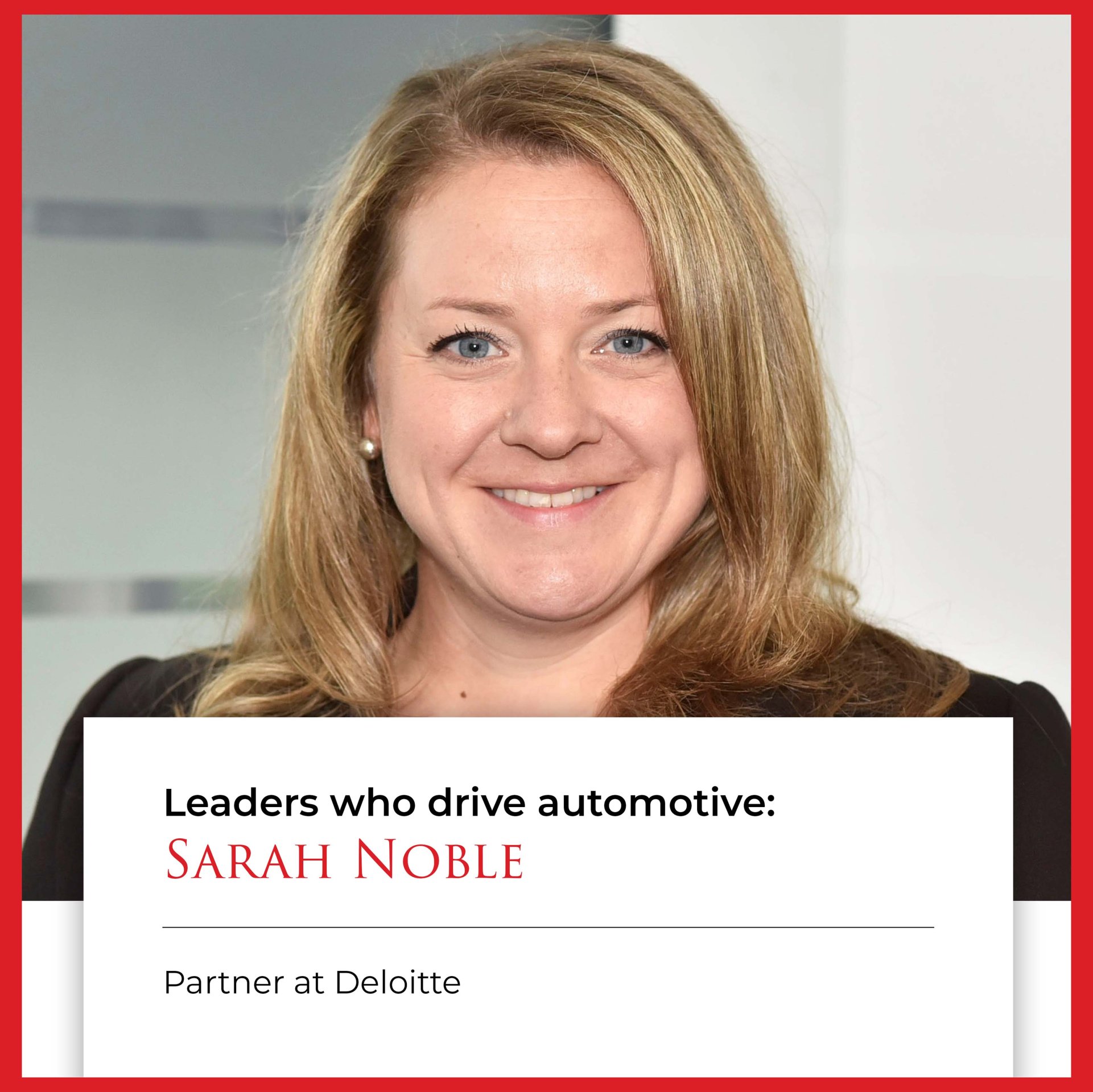
Sarah Noble says automotive leaders are facing more challenges than ever, and everyone is juggling a series of fires from the moment they wake up. Most are doing their best to prioritise and tackle those fires, but the pressures are immense.
You’ve built an impressive career as a partner for leading business consultancies, now with a focus on automotive and supply chain industries. Was that always the plan? Did you have that vision that one day you were going to be an adviser and a leader?
Both of my parents worked in business in some form – traditional 9-to-5 roles – and they were both very technology-focused. Growing up, I knew I wanted to go into business like they did, although at the age of 14 I wasn’t exactly sure what that looked like. Even heading into university, I knew I was drawn to the corporate side of things, but the exact path wasn’t clear.
Throughout my time at university in the United States, we had quite a few consulting firms visit, and consulting sounded super-glamorous back then. The travel, the exposure, the variety of work all seemed incredibly exciting. I don’t regret choosing that path at all. Over time, I discovered that I really enjoy problem-solving at all levels. I love tackling challenges, thinking through solutions and ultimately being helpful. That combination – problem solving and supporting others – has really defined my career and shaped how my role has evolved to where I am today.
Looking at your time at business school, did you always have a clear goal to pursue a career in business, or were you taking life as it came and enjoying wherever it led?
Honestly, it was very much the latter. The promotion that actually hit me the hardest was when I was first made senior manager. It felt like I had truly made it. I was suddenly included at the leadership table and part of much more senior, strategic conversations about the business itself. Emotionally, I was more affected by that promotion than even when I was later made a partner.
I think two things made it significant. First, it marked a real shift in how I was treated within Deloitte. I was now part of discussions about the firm’s strategy, where to focus resources and how to build capabilities. Second, to get promoted to senior manager, I had to present a business case. At the most basic level, I went to the firm and said, ‘We are under-scaled in automotive. Promote me and I’ll build this business for you.’ That process forced me to really grasp what I was aiming for and articulate a clear plan to make it happen. It was a milestone that validated both my past contributions and my readiness to take on the next level of responsibility.
Many people say that when they moved into senior positions, they didn’t necessarily feel ready, but someone pushed them towards it – and that external validation gave them the reassurance to step up. Did you have someone like that supporting you, or was it more a case of advocating for yourself?
I think you 100% have to stand up for yourself, but I didn’t have someone telling me at every step that I was ready. What I did have was an amazing sponsor, particularly during my years in the UK. His name was Mike Woodward, who led our automotive practice and truly understood what sponsorship meant. He would proactively identify opportunities for me, explain the pros and cons and put me forward for experiences I wouldn’t have normally had at my level, giving me access to senior partner and strategic insights. It wasn’t overly methodical, but he put me in positions that built my confidence and helped me navigate challenging next steps. He made a massive difference in my career.
A real passion of mine is the difference between a sponsor, a coach and a mentor. I’ve had many great peer mentors, but sponsorship is really a two-way street. I worked hard for Mike, delivered on the projects he gave me and, in turn, he wanted to continue working with me. Trust is key. You can’t just pick a sponsor out of a notebook. It has to be mutual and is has to work both ways.
You are no leader without a team. I truly enjoy helping others navigate their careers, particularly young women, which ties into my diversity focus. On a selfish note, I can’t exist without strong teams supporting me because their success enables mine. Anyone who thinks they can go it alone will quickly realise that meaningful impact requires collaboration and support from a talented, committed team.
Do you see that as part of the day-to-day role now, or is it something that goes above and beyond the day job?
At a basic level, anyone moving into leadership needs to think about developing their teams and creating a sense of both delivery, passion and followership. But there’s an ‘above and beyond’ aspect to leadership, which is about truly developing relationships. There are individuals who, whether they stay at Deloitte or move elsewhere, I aim to help navigate their careers for as long as I possibly can. I do this because I see great talent and I want to make as much of a difference as I can with that.
I can’t imagine any leader not having some level of this, though it depends on how passionate you are about going beyond the day job. Often, someone comes to me and says, ‘Sarah, I’ve got a problem, can you help?’ Those moments allow you to hear the bigger, sometimes uncomfortable truth behind what’s really going on and to help sort it out effectively.
Given your experience across multiple sectors, what’s your observation on leadership in the automotive industry today? What do you see as its strengths, and where do you think it’s falling short?
The way I look at it is, every one of us when we wake up each day is juggling a series of fires, and each of us will prioritise tackling those fires differently. It’s really hard to walk in someone else’s shoes. Leaders in the automotive space now are facing more challenges than ever. That’s not surprising, and there’s a lot to balance. Across leadership generally, not just in automotive, there’s immense pressure: balancing cost constraints, driving growth, meeting evolving consumer expectations and navigating wider geopolitical factors.
Do I think every leader is doing everything perfectly? Probably not. But I do think most are doing the best they can when they wake up and see the list of fires they need to tackle. Taking a step back, I’d also say that many automotive leaders have risen through the ranks by focusing on vehicle development. Sometimes that means there’s a skills gap when it comes to strategy, understanding financial trade-offs or balancing the many sides of the business. There’s so much complexity in those decisions, and not enough leaders have had the breadth of experience across all functions to navigate it fully. For those coming through the ranks now, there’s a lot to take on, and a lot to learn, to be effective at senior levels.
What advice would you give to someone with ambitions to progress in the automotive industry? Are there particular routes or areas of experience they should prioritise? Some leaders suggest spending time in retail, at the ‘hard end’ of selling vehicles, and also in manufacturing or OEM roles. In your view, is there a balance, and what experiences help shape a strong leader?
I think this is really something each individual needs to develop for themselves, but I would agree that understanding the value chain – how a business actually makes money and becomes successful – is critical. There’s a reason so many CEOs come from a finance background. Understanding the financial side of a business provides a strong foundation for decision-making. In recent years, there’s been a perception in some industries – maybe less so in automotive – that profit is almost a dirty word. We’re told we should focus on doing the right thing sustainably or for people, but the reality is that profit is what enables investment in people, innovation and growth. Without that, nothing else is sustainable. I see a gap in financial acuity among leaders, and I think developing that is essential for success.
You don’t need to come from a finance background to gain these skills. There are many routes: getting involved in projects that touch finances, managing budgets or even taking a class to understand profit and loss statements. For me personally, although I never considered myself academic, I learned far more on the job than in any classroom. When I was preparing for partner, I took an internal role focused on running the finances of a part of our business. It gave me a deep understanding of how a consulting firm really makes money in terms of expenses, margins and how it all fits together, and it made me much better at what I do, both for the firm and for my clients.
You’re the founder of ‘Women at the Wheel’, Deloitte’s initiative supporting gender diversity and inclusion in the automotive industry. What motivated you to create the programme, and what impact have you seen since its launch?
There’s a long story behind it but, to cut it short, the idea for Women at the Wheel came from an opportunity I had in 2015 to meet some truly inspiring senior women – leaders like the head of manufacturing for Ford in Europe, among others. Hearing their stories made me think: how can we give more people access to these experiences? At the time, I was at a relatively senior level myself and realised I had become somewhat blind to the fact that I was frequently the only woman in the room. You get used to it, but I didn’t want others to feel the same.
I feel incredibly lucky that Deloitte supported me in creating the initiative. Over the years, I was given the platform, resources and encouragement to make it happen, and the impact has been beyond anything I expected – not just for me, but for everyone involved. It’s a passion project that has resonated widely, giving people access to role models, coaching and a community they might not otherwise have.
Do I think there is more to be done at senior levels? Absolutely. But I am encouraged by the growing presence of women at the table and the genuine effort to improve representation. From an international perspective, Women at the Wheel now exists in Germany, France, Australia, Japan, Southeast Asia, Canada and the US, and it has taken off remarkably well. We operate with an ethos of sharing stories, providing access and creating a community – giving people opportunities to connect, learn and find guidance at different stages of their careers.
If you were starting your career again, knowing what you know now, do you think the pathway – particularly through the lens of gender – offers more equal opportunities today than when you first started?
If you had asked me this 18 months ago, I would have said yes. I felt optimistic about the progress being made. I won’t lie, though. I’m concerned that the pendulum may be swinging the other way currently. There’s a risk that the progress we’ve seen is slowing down, or even partially reversing. That said, I do think things are still better than they were, at least in the sense that gender diversity remains a visible and ongoing conversation. But the reality is, it’s still challenging for many women, and there’s more work to be done to ensure that momentum continues.
What advice would you give to leaders or aspiring leaders – for example, people at senior manager level – who are thinking about stepping up and moving further up the chain, particularly in the supply chain and automotive sectors?
I think there are a few key things to consider when it comes to career development. First, sponsorship is absolutely critical. Find your group – the people who will support and guide you. That group can include peers who collaborate and challenge you, sponsors who can advocate for you and colleagues who will lift you as you rise while also helping you grow. Being purposeful about building this network is essential.
Early in my career, I was hesitant to be explicit about my ambition. I didn’t want to risk failure by being visible, but being more deliberate would likely have made my journey smoother.
International experience is also important, particularly if you aim for global leadership. Having exposure to only one market can be limiting. China, for instance, is a key priority, but it’s just one part of the picture. The real value comes from gaining experiences across geographies, functions and the value chain. That breadth prepares you for senior roles and gives you a deeper perspective on global business.
Different markets offer unique lessons, but you don’t need to focus solely on one country. For example, German OEMs historically expected leaders to progress internally within Germany, but today the focus is shifting toward broader experience. Understanding different approaches – whether German, Korean or other markets – can enhance your adaptability and insight, but the exact path will vary for each individual.
Finally, the automotive market itself is evolving rapidly. Growth will look very different across regions. In Europe and the US, it’s no longer just about volume, while in emerging markets, there’s still room to scale. Agility, resilience and a willingness to adapt will be critical for anyone navigating this landscape.
How do you know, as a leader, when it’s the right time to step aside and let someone else take over? How do you recognise that you’ve done enough and it’s time to move on?
One of the hardest lessons I’ve learned is truly letting people find their own path. Delegation isn’t just about assigning tasks; it’s about giving someone a challenge and allowing them to approach it in their own way. They might not follow your path exactly, but as long as they reach the necessary outcome, that’s what matters. The key is building confidence and trust so they know when to ask for help, and knowing that they don’t need you until they do.
At a more senior level, it’s also about rethinking value. Many leaders struggle with letting go of responsibilities or redefining their contribution as they progress in their careers. I believe there’s still so much value older, experienced leaders bring – whether coaching teams, providing wisdom or challenging perspectives – but it requires balancing stepping back with continuing to add impact. Understanding the evolving ways that you can contribute is a skill in itself.
On a broader scale, understanding how a business creates value is essential. There’s a reason so many CEOs come from CFO backgrounds: you need to grasp how a business makes money. Profit isn’t a dirty word. It’s what enables investment in people and innovation.
While my academic background wasn’t particularly technical, I learned far more on the job. Being creative about gaining financial and operational insight through internal roles, projects or even self-directed learning is critical to understanding the business holistically and improving decision-making.
Finally, as leaders progress, it’s important to continually reassess how they add value. Titles and seniority don’t automatically define contribution; it’s about the impact you create in the moment and across the organisation. That balance of stepping back, letting others grow and redefining your own contribution is a continual journey.